

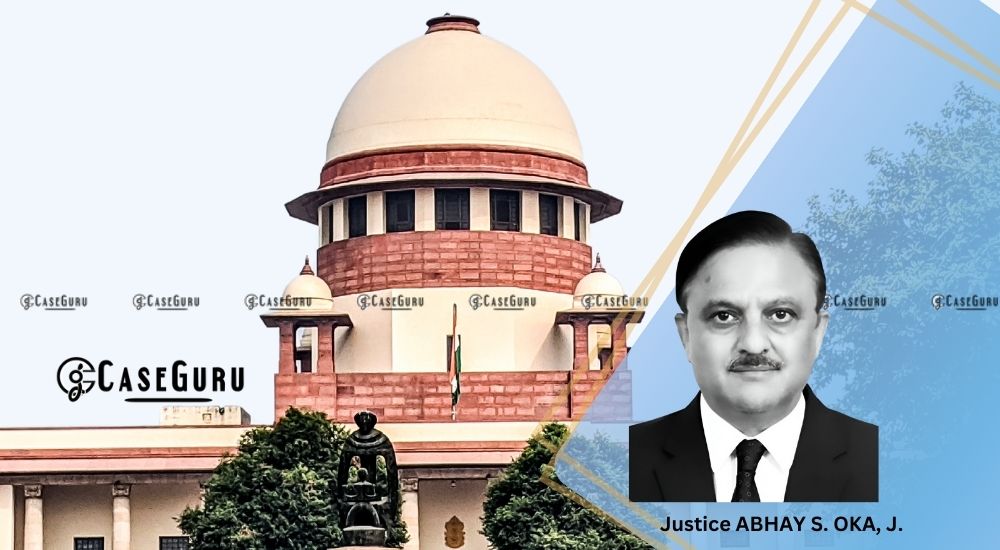
The Supreme Court of India has quashed an FIR against a professor for his WhatsApp status, and emphasized the importance of freedom of speech and expression.
The Supreme Court observed that the time has come "to enlighten and educate our police machinery on the concept of freedom of speech and expression guaranteed by Article 19(1)(a) of the Constitution and the extent of reasonable restraint on their free speech and expression."
The Supreme Court ruled that messages/status on WhatsApp about the abrogation of Article 370 and extending well-wishes to Pakistan on its Independence Day do not constitute an offense under Section 153-A of the Indian Penal Code, which prohibits promoting enmity between different groups. The court emphasized that freedom of speech, including the right to criticize government actions, is protected under the Constitution. The court further stressed the importance of educating the police on the concept of freedom of speech and expression to prevent misuse of the law add adds "to enlighten and educate our police machinery on the concept of freedom of speech and expression guaranteed by Article 19(1)(a) of the Constitution and the extent of reasonable restraint on their free speech and expression."
Javed Ahmad Hajam, a professor in at Sanjay Ghodawat College in District Kolhapur, Maharashtra., who has worked in the college between August 13th and 15th, 2022 was a member of a WhatsApp group that included parents and teachers.., Prof Hajam posted two messages on his WhatsApp status: "August 5 - Black Day Jammu & Kashmir" and "14th August - Happy Independence Day Pakistan, and based on these posts, an FIR was registered against Hajam under Section 153-A of the Indian Penal Code, which prohibits promoting disharmony or feelings of enmity, hatred, or ill-will between different religious, racial, language, or regional groups or castes or communities.
Hajam challenged the FIR in the High Court of Judicature at Bombay, but his petition was dismissed. The High Court held that while the message about celebrating Pakistan's Independence Day did not fall under Section 153-A, the other message could attract the offense punishable under the section.
Hajam then appealed to the Supreme Court, which quashed the FIR and the proceedings based on it. The Supreme Court held that the professor's statements did not fall under the ambit of Section 153-A, as they did not incite violence or hatred based on religion, race, or other protected grounds.
The Court emphasized the importance of freedom of speech and expression, stating that a citizen's right to dissent is an integral part of a democracy, as long as it is expressed lawfully and within the bounds of reasonable restrictions. And after pointing towards the useful reference to a decision in the case of #*"Patricia Mukhim v. State of Meghalaya & Ors4" *
"9. Only where the written or spoken words have the tendency of creating public disorder or disturbance of law and order or affecting public tranquility, the law needs to step in to prevent such an activity. The intention to cause disorder or incite people to violence is the sine qua non of the offence under Section 153-A IPC and the prosecution has to prove the existence of mens rea in order to succeed. [Balwant Singh v. State of Punjab, (1995) 3 SCC 214 : 1995 SCC (Cri) 432]"
The Court also clarified that the test for determining whether words or expressions violate Section 153-A is not the effect they may have on individuals with weak minds or who see danger in every hostile point of view, but rather the general impact of the utterances on reasonable people who are significant in numbers.
Additionally, the Court stressed the need to educate the police machinery about the concept of freedom of speech and expression and the extent of reasonable restraint on it.
Between: Javed Ahmad Hajam Appellant Versus State of Maharashtra & Anr. Coram: ABHAY S. OKA, J. CRIMINAL APPEAL NO.886 OF 2024 (Arising out of Special Leave Petition (Crl.) No.11122 of 2023) Date: 07-03-2024

Comments